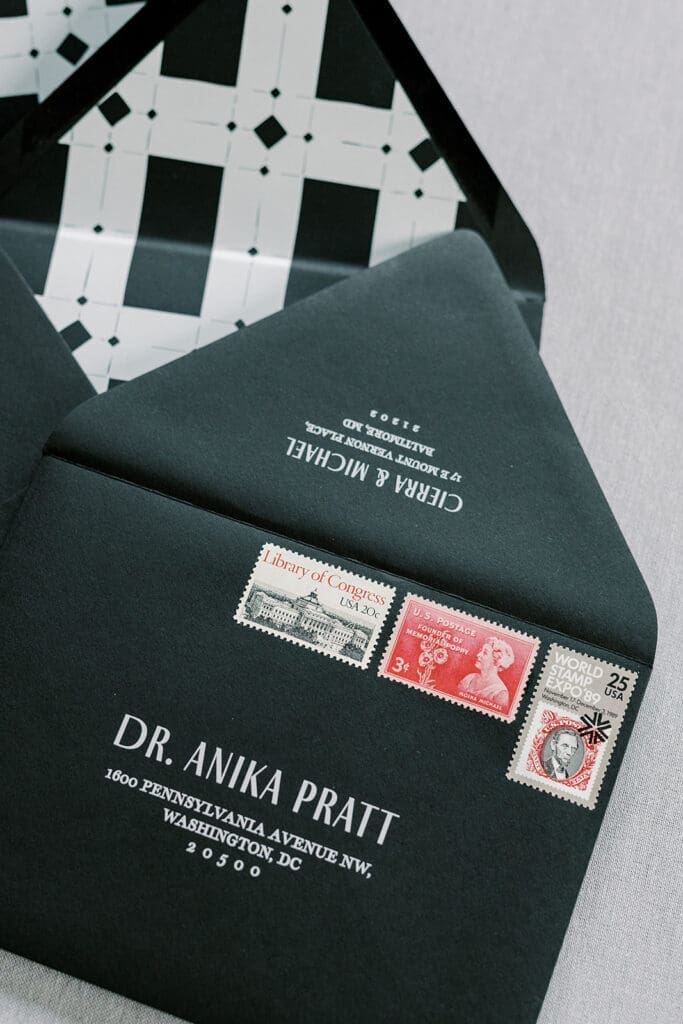
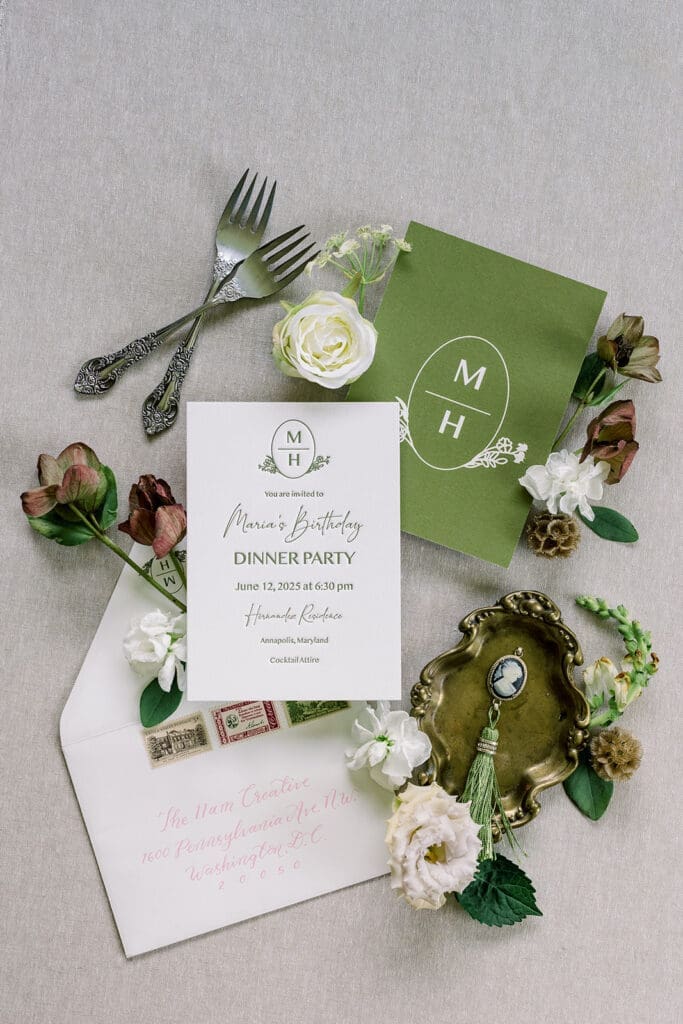
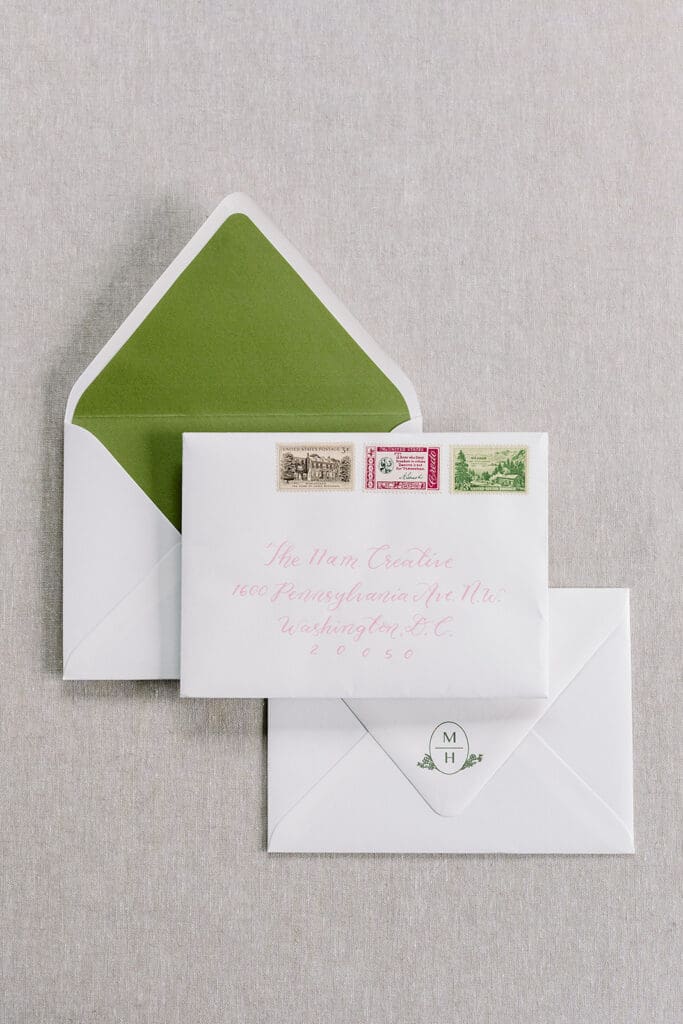
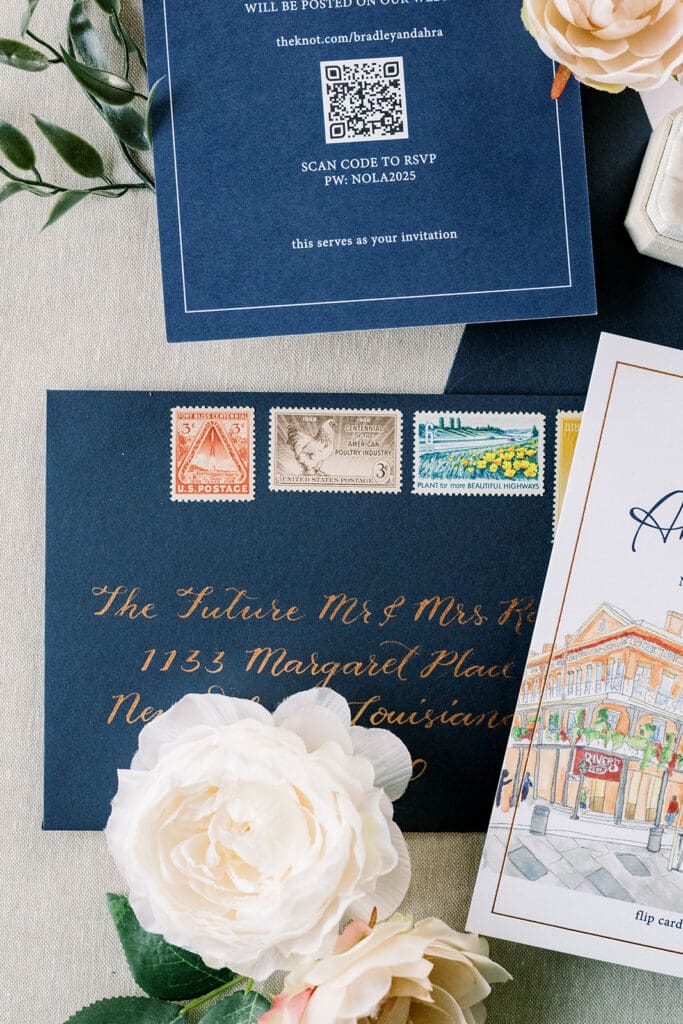
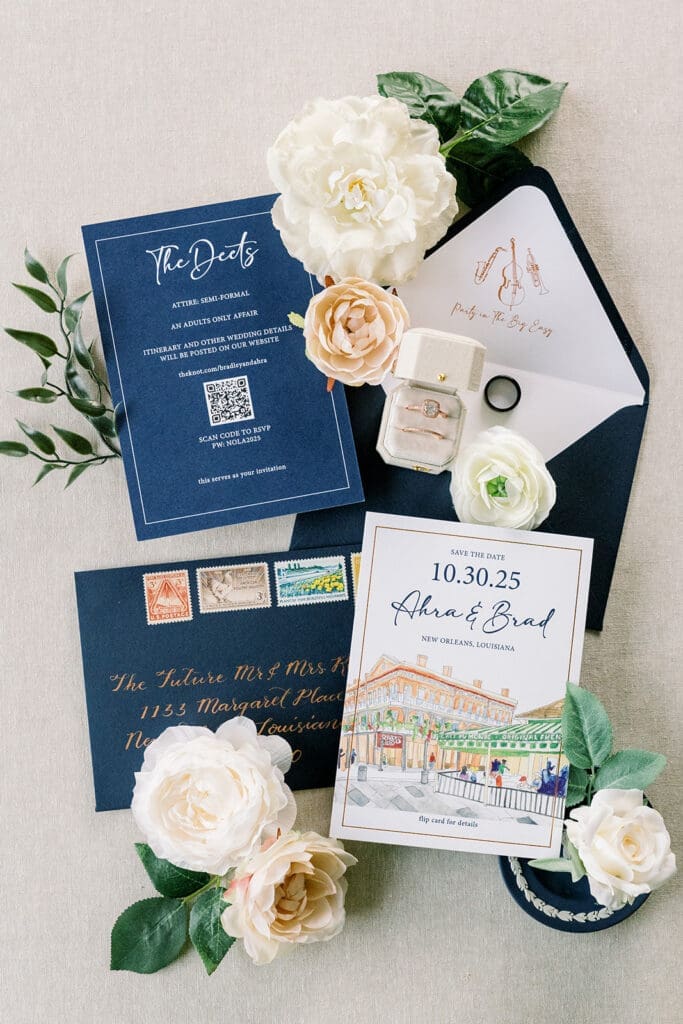
After months of dreaming, designing, and perfecting your wedding invitations, one big question remains:
How do you actually mail them?
Mailing wedding invitations can be one of the hottest topics on wedding forums and subreddits, just for generally being a pain in the glutes.
Between USPS inconsistencies, postage rules, and unpredictable delivery times, it is a part of the process that requires more planning than most couples expect.
This guide walks you through everything couples and planners need to know about mailing wedding invitations, from ideal timing and postage rules to USPS handling tips and realistic expectations.
When Should You Mail Wedding Invitations?
Your mailing date depends on one key question:
When is your final guest count due to your planner or caterer?
Most planners and caterers require a confirmed guest count 4 to 6 weeks before the wedding. Work backward from that date to determine your mailing window.
General guidelines for mailing wedding invitations:
- 6–8 weeks before the wedding is the industry standard (I respectfully disagree. Read my hot take below.)
- 8–10+ weeks for heavy travel seasons, holiday weeks, and destination weddings
Guests traveling for destination weddings need your wedding information sooner to secure flights, accommodations, and plan their outfits!
Hot Take: As a fine art stationery designer who works with thicker papers and fancy embellishments, I actually recommend closer to 10 or even 12 weeks for more buffer time.
Do you remember your latest online order package delivery fail? The US mail system is not perfect, and we must do everything we can to lessen the risk.
Some couples even take the extra precaution of sending their invitations in a priority envelope or opting for boxed invitations instead.
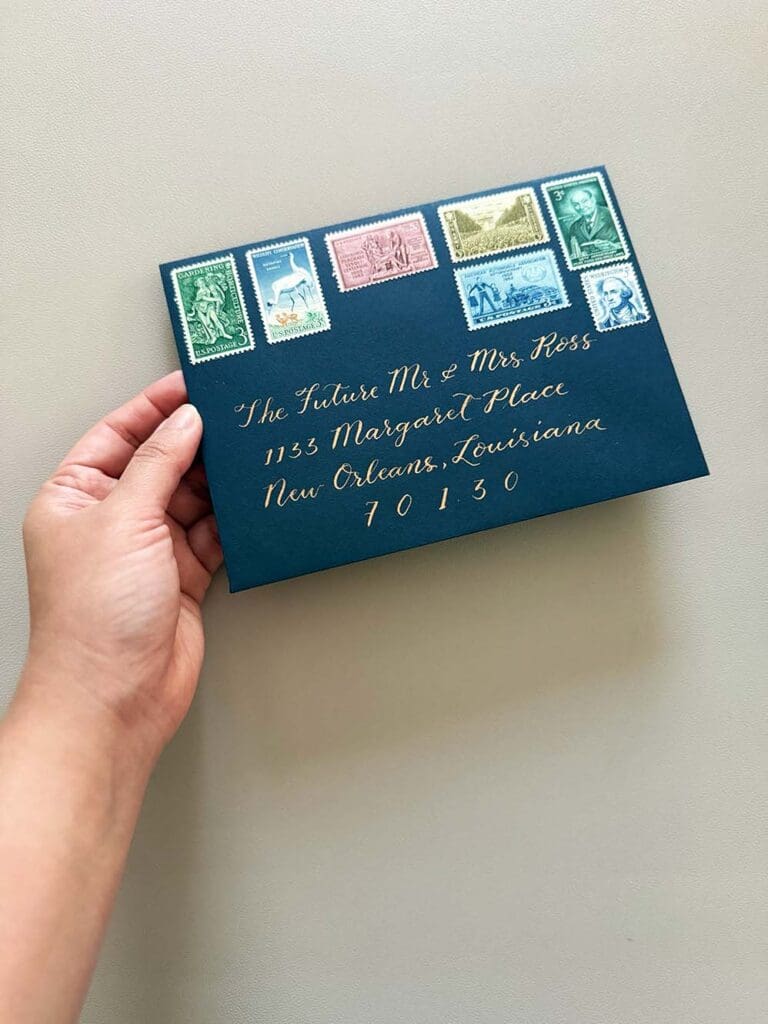
You can find USPS Guidelines here. Different clerks may give different answers, particularly about hand-canceling (more on that below).
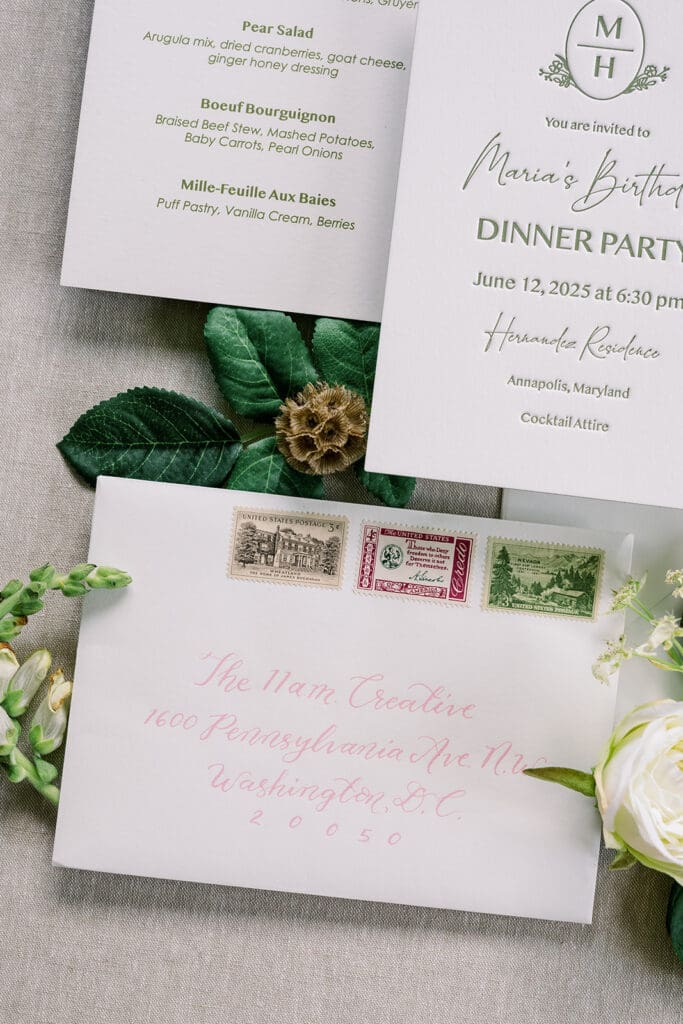
Take a fully assembled invitation in person to get weighed and consult on postage beforehand.
How Much Postage Do You Need?
Postage is determined by:
- weight
- size and shape (square envelopes cost more)
- rigidity
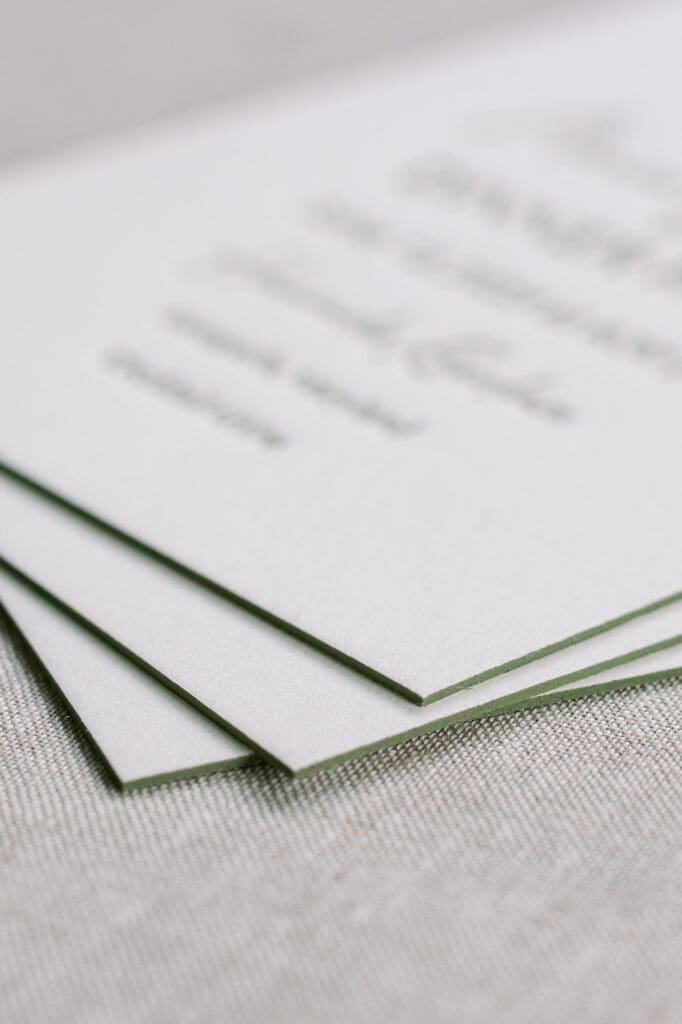
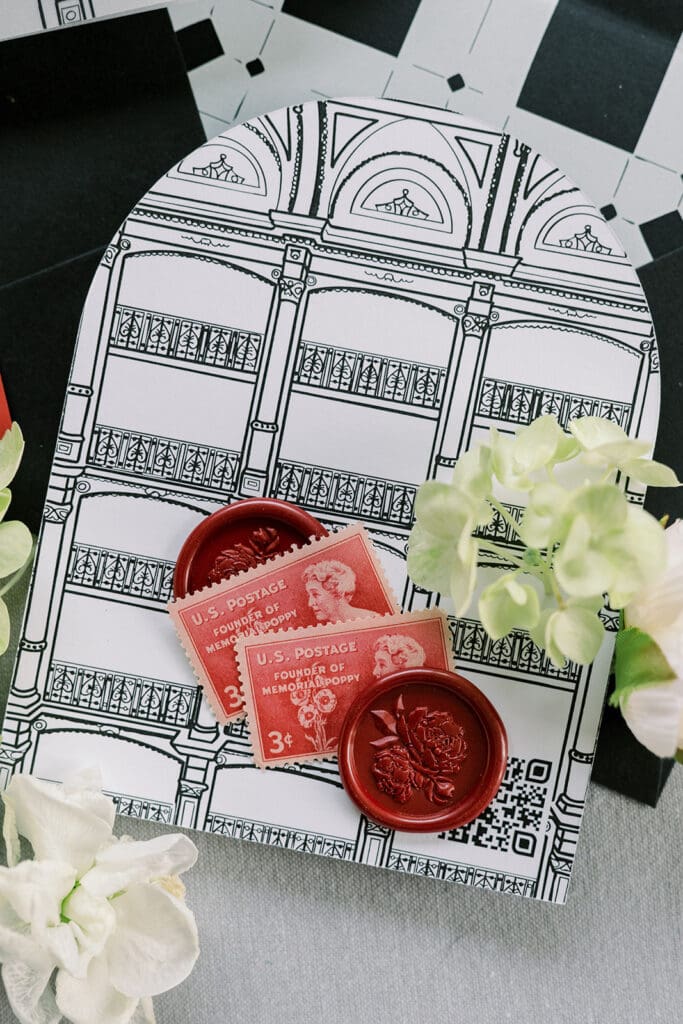
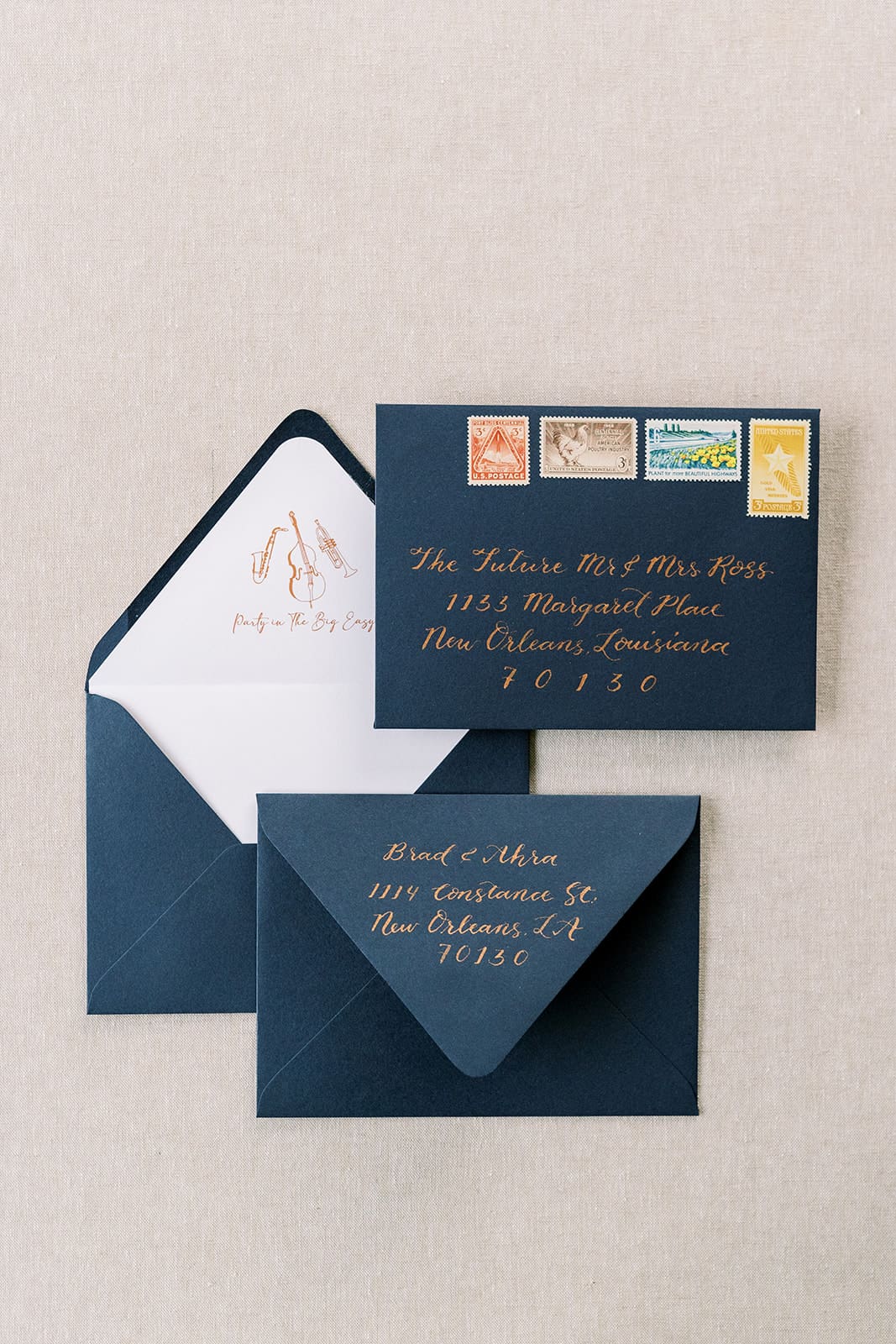
- embellishments (wax seals, ribbon, thick paper)
- machinability
USPS puts all mail through a machine to “cancel” the stamps, so they cannot be used again. If an envelope is rigid or cannot bend smoothly, it is considered non-machinable.
Bring your invitations to the counter and request that your invitations be hand-cancelled. This will require an extra fee.
Common non-machinable elements:
- wax seals
- silk ribbon
- layered or extra-thick cardstock greater than 1/4 inch
- square envelopes
- handmade paper envelopes
Hand Cancelling vs. Machine Cancelling
Machine Canceling
- faster
- more automated
- higher risk of scuffs, bends, and roller marks
Hand Canceling
- gentler
- done by hand at the counter
- ideal for fine art invitations
- not guaranteed, depends on USPS location
Even when hand-cancelled, envelopes may still enter machines later. Approach this step as a best effort, not a guarantee.
Should You Use an Outdoor Blue USPS Box?
No. Your invitations will go through more roughness than necessary and have a higher chance of being lost. It’s worth the extra effort to go in and hand them directly to a clerk. Don’t risk it for luxury or fine art invitations.
Common Reasons Invitations Get Returned or Delayed
- incorrect addresses
- insufficient or incorrect postage
- envelopes too rigid for machines
- inconsistent USPS handling
If an invitation is returned, place the original envelope inside a new outer envelope, apply the correct postage, and resend.
International Mailing Tips
For guests living abroad:
- mail 10–12+ weeks before the wedding
- expect customs or local postal delays
- consider using digital RSVP options for international guests
Tips for a Smooth Mailing Experience
1. Confirm postage in-person at the post office
Get your invitations weighed by their scale and get confirmation on correct postage amount.
2. Avoid high-traffic mailing weeks.
Holidays, winter storms, and major election weeks slow everything down.
3. Keep spare invitations.
They’re helpful for photos, styling, and last-minute guests. Also, account for the fact that 3-5% of mail is lost in transit.
4. Mail early.
It’s the single biggest factor in reducing stress.
Final Thoughts
Mailing wedding invitations takes time, preparation, and a bit of chance. But when everything is planned well, your invitations arrive safely and set the tone for a beautiful, intentional guest experience.
If all of this feels overwhelming, or you simply want someone who will take the stress off your plate, hire a full-service stationer! I manage the mailing process for my couples so they can enjoy their engagement instead of standing in line at the post office.
If you’re planning the rest of your stationery journey, you can read about the ideal custom invitation timeline here, which gives you an overview of the steps and how it fits within your wedding planning timeline.
Are you ready to begin your custom stationery journey? Inquire through my contact form to start a conversation!