You’ve probably fallen in love with a wedding invitation online…
only to realize you have no idea why one suite costs $800 and another costs $3,000+.
There are many factors, but printing method is one of the biggest levers that determines cost.
From digital to letterpress, to foil, and embossing, each affects how your invitations look and feel in your guests’ hands. And honestly, they play a subtle role in how upscale your event is perceived.
If you’re trying to understand what you’re actually paying for, this guide to fine art wedding stationery printing methods breaks it down simply so you can make an informed (and confident) decision.
The Most Common Wedding Invitation Printing Methods
Digital Printing (Flat Printing)
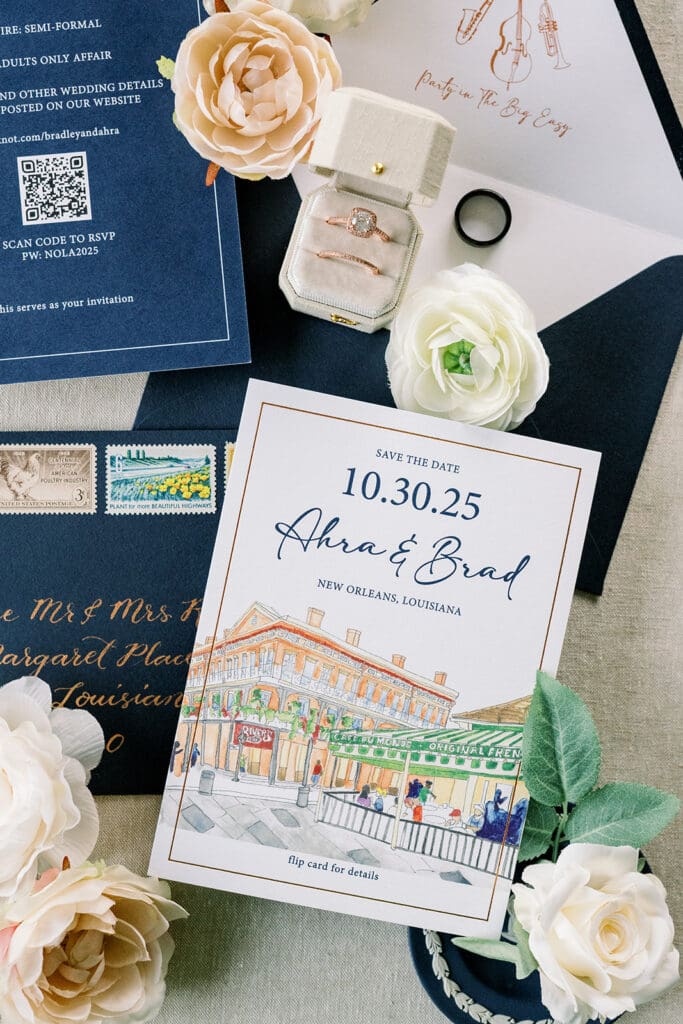
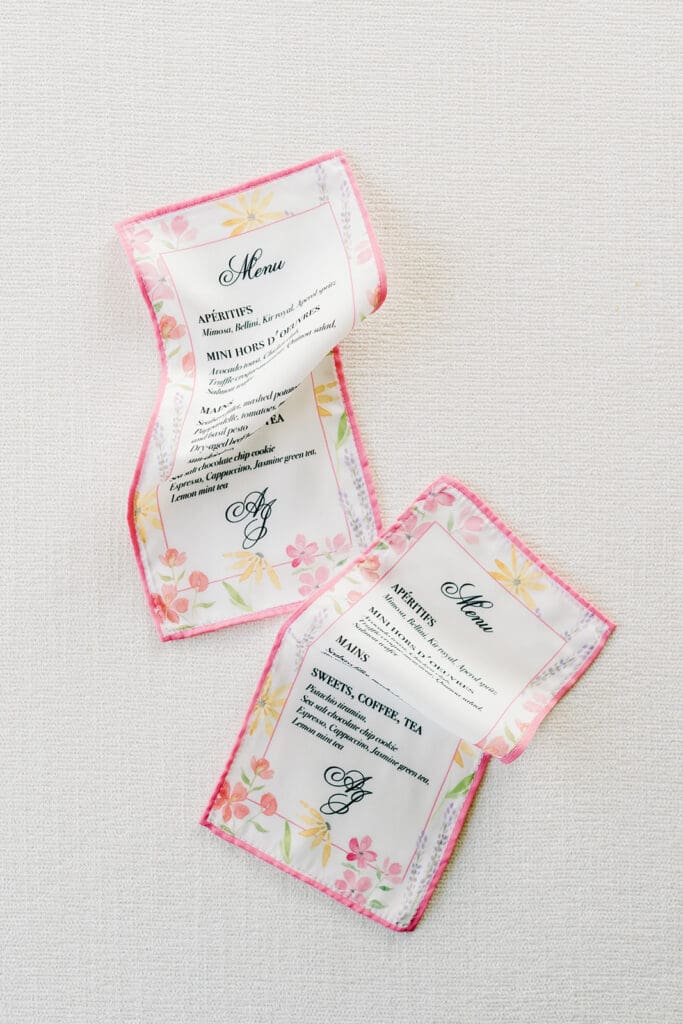
Ink is printed directly onto the surface of the paper. This method works beautifully for full-color artwork like watercolor illustrations.
The finish is smooth, and it’s the lowest-cost option among the printing methods. Fast and great for big batches.
Digital printing can absolutely be beautiful when paired with strong design and quality paper. It doesn’t create that tactile, elevated feel that fine art clients are usually drawn to, so I often recommend pairing this printing method with textured cardstock.
White Ink Printing
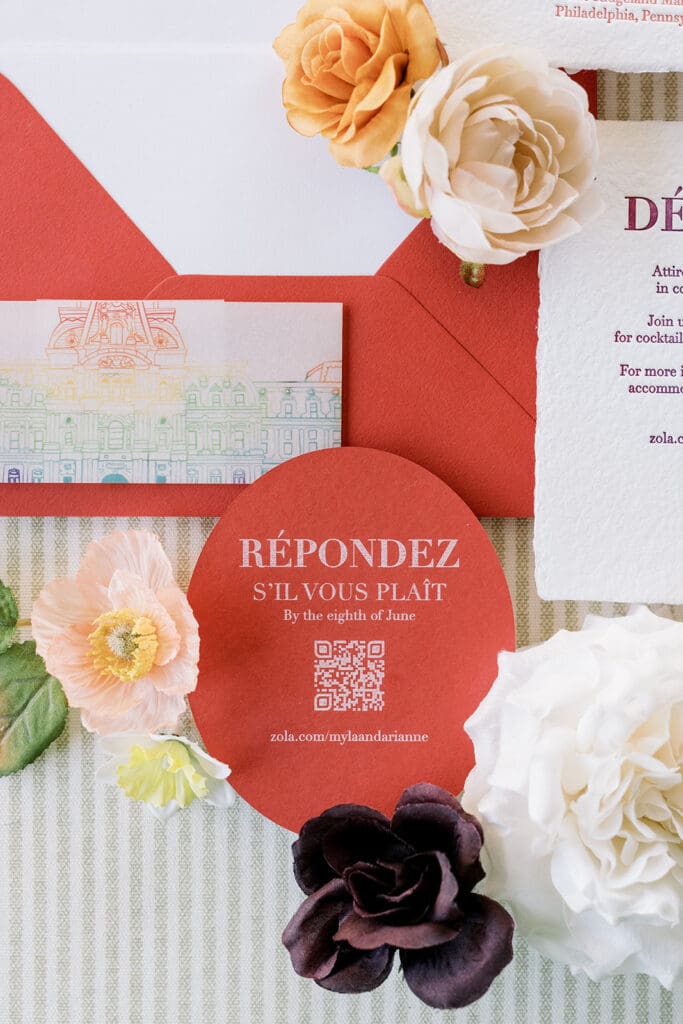
White ink printing is a form of digital printing that uses opaque white ink on darker or colored paper.
This matters if having a true, solid-colored cardstock look is important. That is, when you look at the card from the side, you won’t see the white paper core like you would with a full-page flood print.
In terms of cost, white ink is typically a small upcharge from standard digital printing due to the specialty ink and setup.
Letterpress Printing
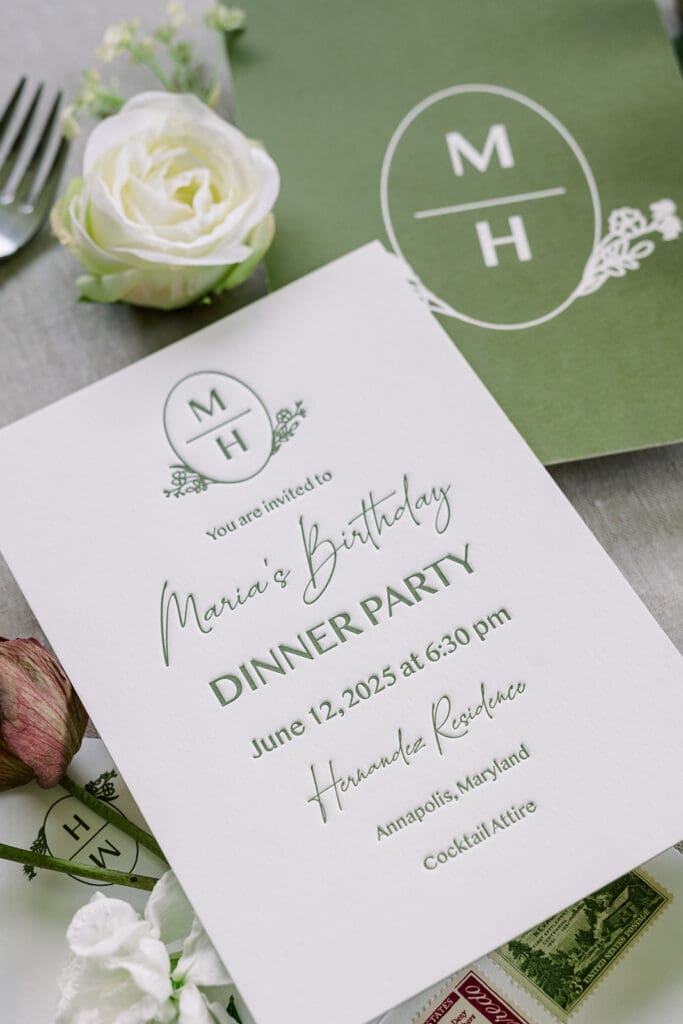
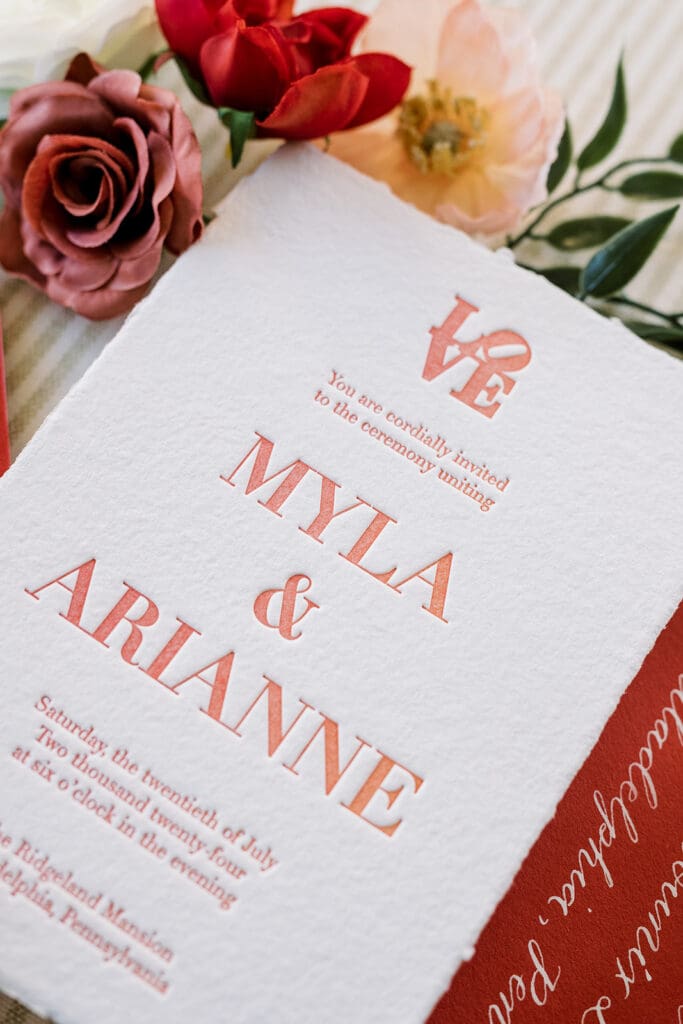
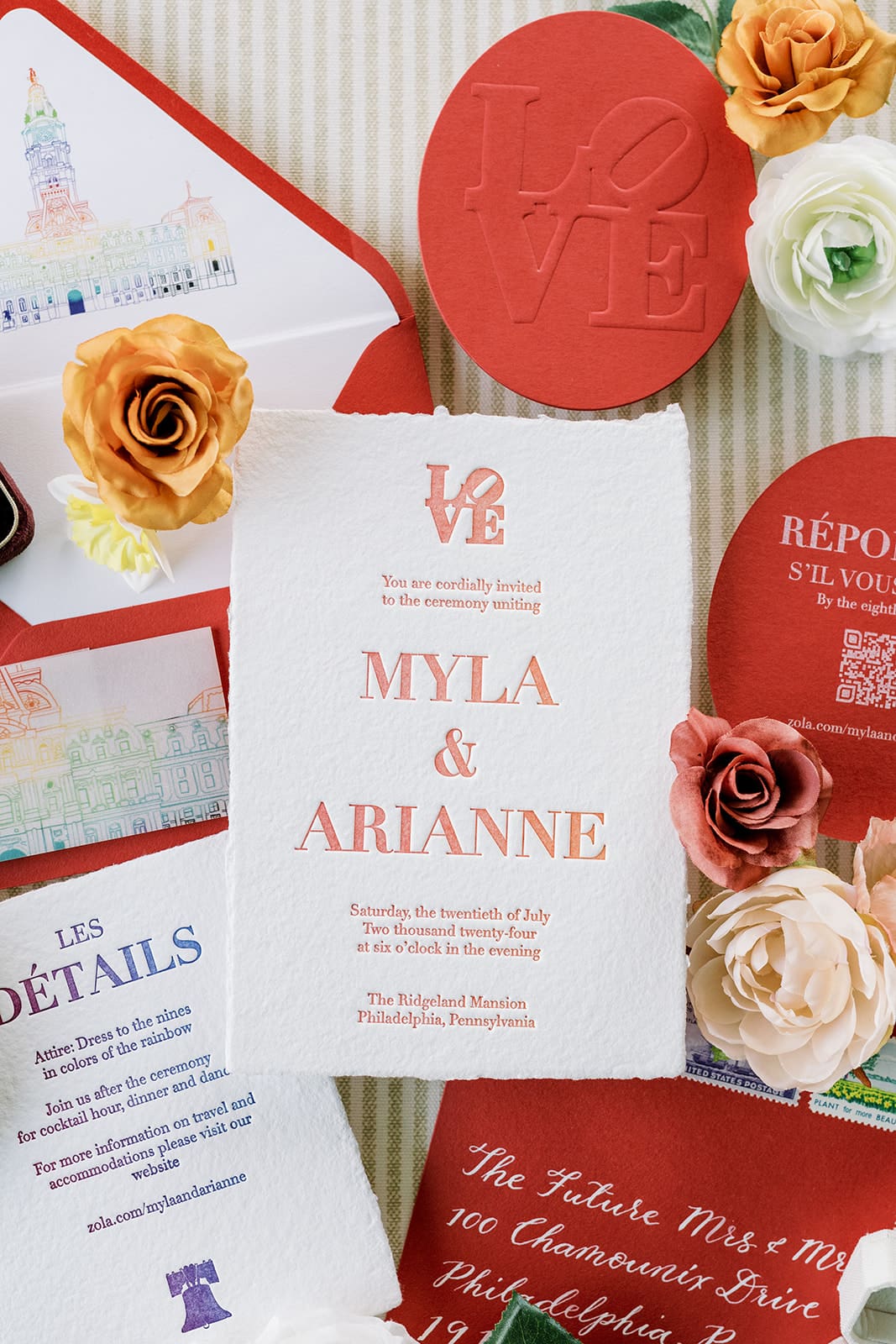
Letterpress uses custom plates on an antique press. Each sheet of paper is carefully fed and pressed ONE at a time. It’s a slower method, but the deep, tactile impression is so worth it!
Each ink color is also imprinted separately. More colors require more passes and more skill to ensure everything is aligned precisely.
Letterpress feels pillowy and substantial, leaving indentations you can actually run your fingers over. Even minimal or all-text designs are instantly transformed to be more luxurious and refined.
This method comes at a higher cost due to custom plates, labor-intensive setup, and the time it takes to produce each individual piece.
Foil Stamping
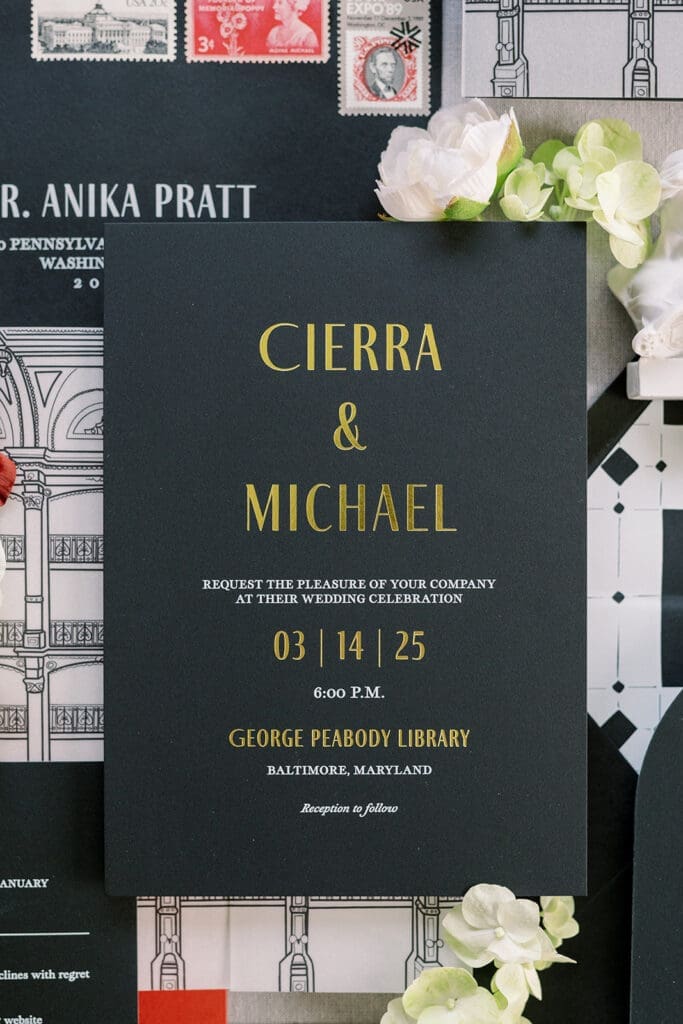
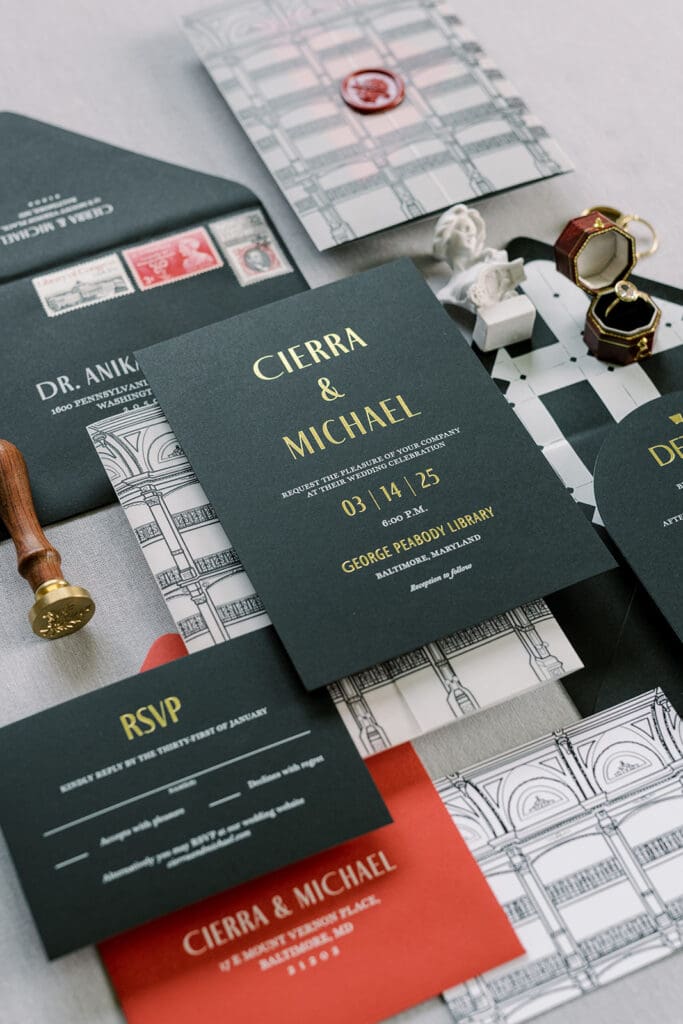
Foil stamping uses a custom metal plate (die) and heat to press metallic foil into the paper. It adds contrast, shine, and a sense of drama.
Like letterpress, foil requires a multi-step process, which contributes to a higher price point.
Foil adds a very regal look to your wedding paper. I typically recommend it if you’re going for an opulent feel, like a museum or estate wedding, or an event at a historic venue.
Embossing (Blind or Foil Emboss)
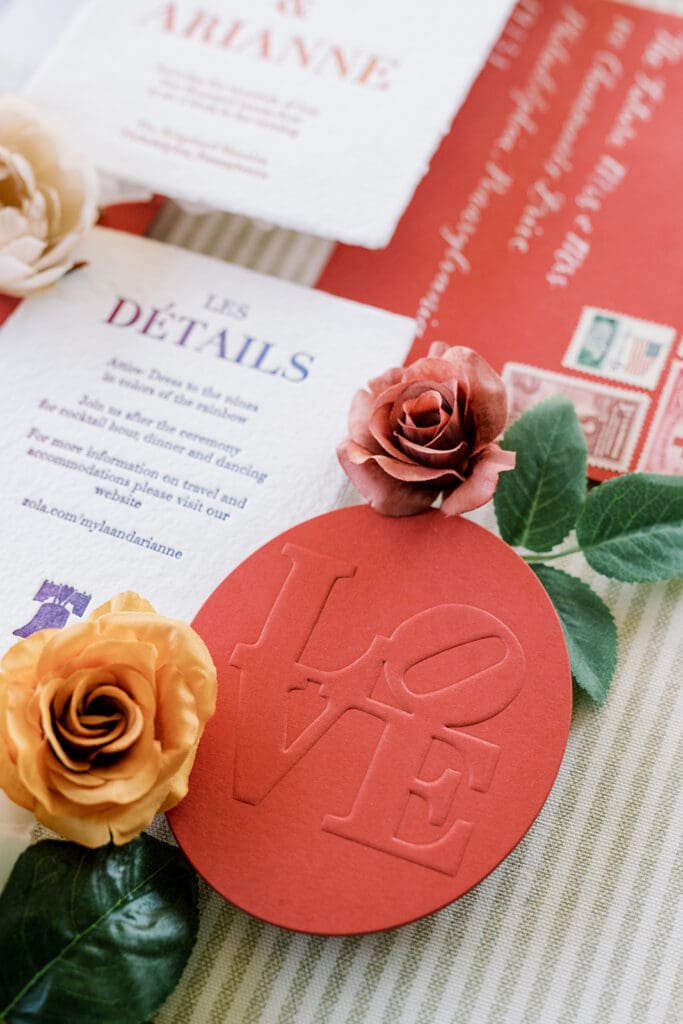
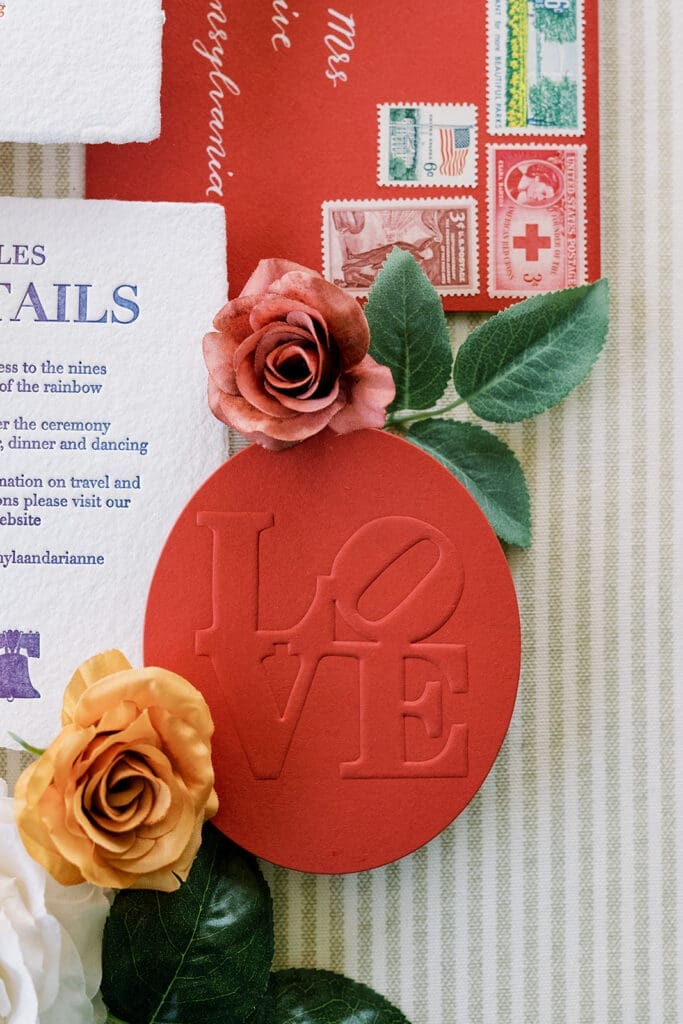
Embossing creates a raised design in the paper without the use of ink.
It requires TWO custom dies that work together, one for the front and one for the back, to press the paper into shape.
There are different levels of embossing, each requiring a different level of file preparation.
A standard one-level emboss creates a clean, raised impression.
More advanced techniques, like sculpted or 3D embossing, introduce contouring, depth, and dimension within the design. This requires extensive collaboration between the designer and die maker to produce the proper result.
This is why embossing is often one of the most expensive printing methods, especially for detailed or dimensional work.
If you love the idea of your guests holding what is basically a sculpture in paper form, this is the way to go. Perfect for the “no detail spared” type of event!
So Which Printing Method Should You Choose?
It depends on what you value most:
- Want something colorful and efficient? Digital
- Want that soft, tactile luxury feel? Letterpress
- Want bold, eye-catching shine? Foil
- Want texture and dimension? Embossing
But here’s the thing…
You Don’t Have to Choose Just One
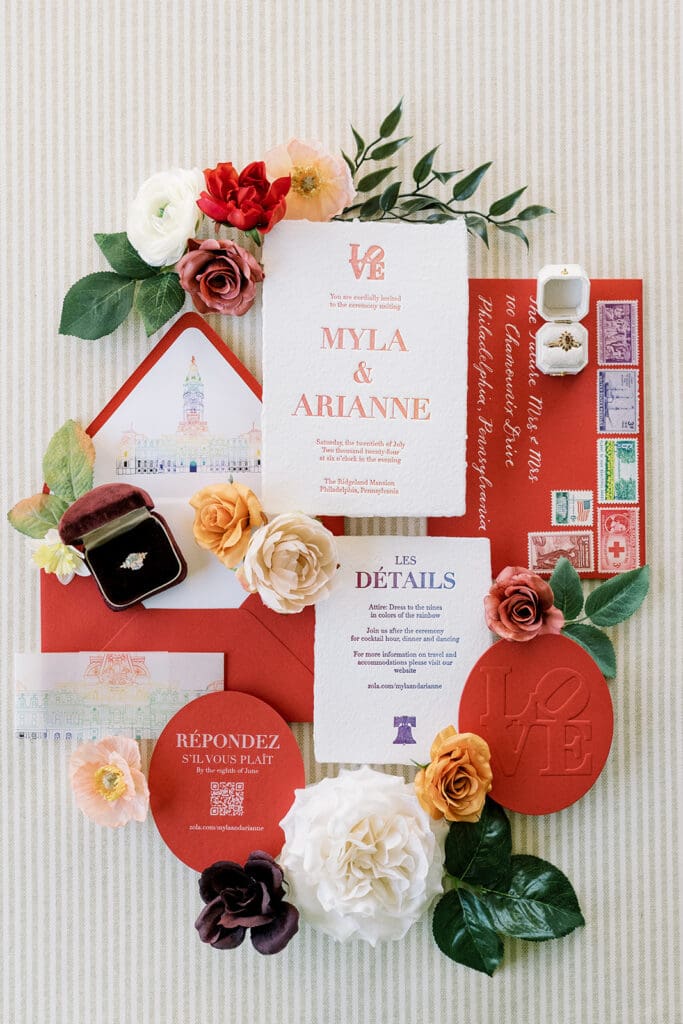
Many fine art wedding invitations use a combination of printing methods to create a layered, editorial look.
Combining methods does require more behind-the-scenes work, and production and timelines become a little more complicated.
But that is where working with a skilled full-service stationer becomes invaluable.
You are guided through
- what’s possible
- what makes sense for your design
- where each printing method has its limitations.
Everything is considered and taken care of for you!
Ready to Explore What’s Possible?
Seeing (and feeling) is believing.
When you book with The 11 a.m. Creative, you’ll get to explore samples, materials, and color palettes via in-person design consultation, or through a curated sample kit mailed to you (if preferred, or if you’re not local to Washington DC, Maryland, or Virginia).
Experiencing these fine art wedding stationery printing methods firsthand allows you to truly understand the differences and make informed decisions with confidence.
From there, we’ll talk through what works best for your vision, your budget, and your event.
If you’re ready to get started, inquire here to begin your custom invitation process.
Photo credits: Annie Lui Photography